For quick contact: +90 532 288 2200


Find out when to sample digital pigment printing on cotton or sublimation on polyester. Prepare comparable quotes for fabric printing by the metre.
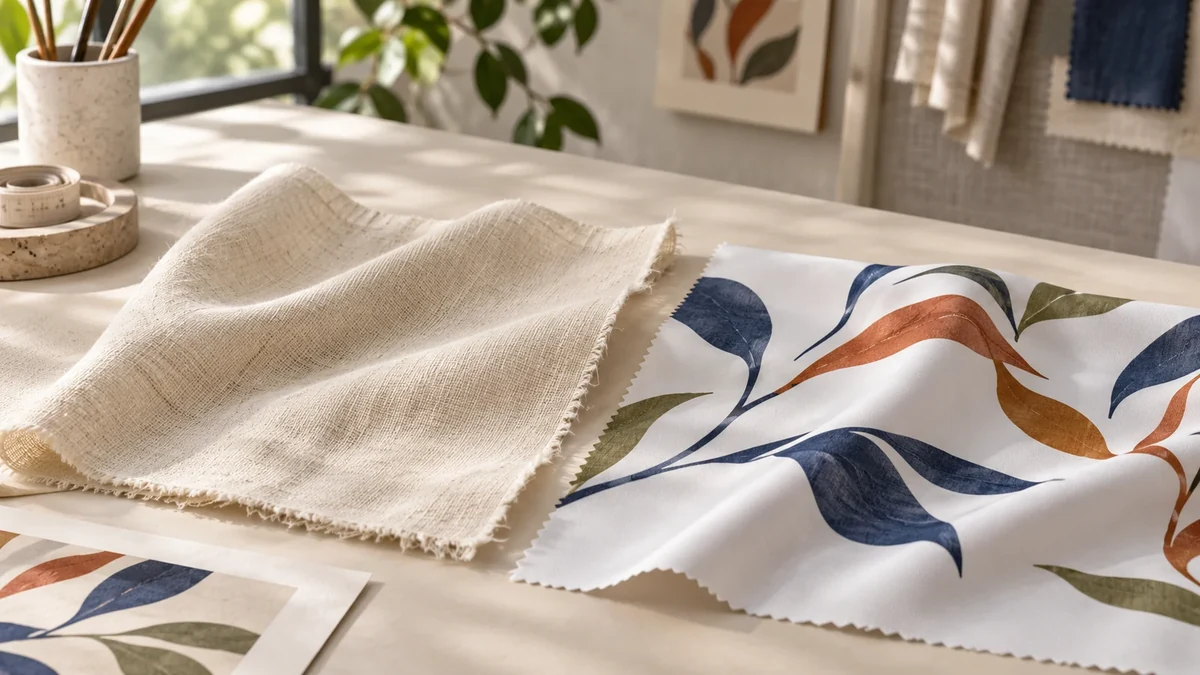
For roll-to-roll printing on untreated 100% cotton, start by evaluating digital pigment printing. Conventional dye-sublimation transfer works on polyester-based fabrics. Cotton-specific transfers use different materials or transfer systems, which can change how the finished fabric feels. Check the fibre content before choosing the method even if you already have a fabric swatch.
The design is printed onto transfer paper, then transferred with heat. Epson’s fabric guidance recommends white or light polyester for standard dye-sublimation. A conventional setup does not print white, so unprinted areas retain the ground colour. That also affects the contrast of pale motifs on dark polyester. If your garment has a dark ground, show the printer which parts of the artwork need to stay light and check the contrast on the production fabric.
A cotton–polyester blend needs its own sample. The fibre ratio, knit or weave, surface finish, colour and response to heat can all affect the print. Compare the result in daylight and agree any washing, rubbing or other tests for the intended use. For treatment layers or special transfer papers for natural fibres, check the particular system. Sawgrass explains those paper options for its own equipment.
On cotton, compare the definition of fine lines, the appearance of dense printed areas and the feel of the printed and unprinted fabric. Pretreatment, binder and fixing depend on the particular ink system and fabric. Ask your printer what is needed for the target appearance and care conditions. Epson’s digital textile printing guide describes several direct-to-fabric ink systems including pigment.
For a light polyester fabric, ask for a sublimation sample in the production colour. For a blend, share the full fibre percentages before choosing between processes. Where possible, use a piece from the same lot in sampling and production.
If you are considering pigment printing for cotton, our guide to digital pigment printing on fabric explains how to plan a sample on the production fabric and check what the quotation covers.
Start with the construction, usable print width, quantity and artwork. Check whether each quote includes fabric supply, sampling, fabric preparation and fixing. Mark the repeat dimensions, expected colours and any areas where hand or stretch matters. Add the intended care conditions and test requirements. A quotation for one fabric and width may cover a different amount of usable material than another.
If the fibre content is unknown, ask the supplier for a specification and keep a cutting of the production fabric. See our digital fabric printing service and fabric sourcing options, or contact Ünlü Group to discuss a sample.
phone: +90 212 576 5250
fax: +90 212 493 0336
email: info@unlutransfer.com
Yenidoğan Mah. Eser Sok. No: 6-8
Bayrampaşa, 34030,
Istanbul / Turkey
TR 9150171175
Bayrampaşa Tax Office