For quick contact: +90 532 288 2200


Retain the approved print, unprinted fabric and output details. Compare new yardage at the same points in the design and under the same approval light.
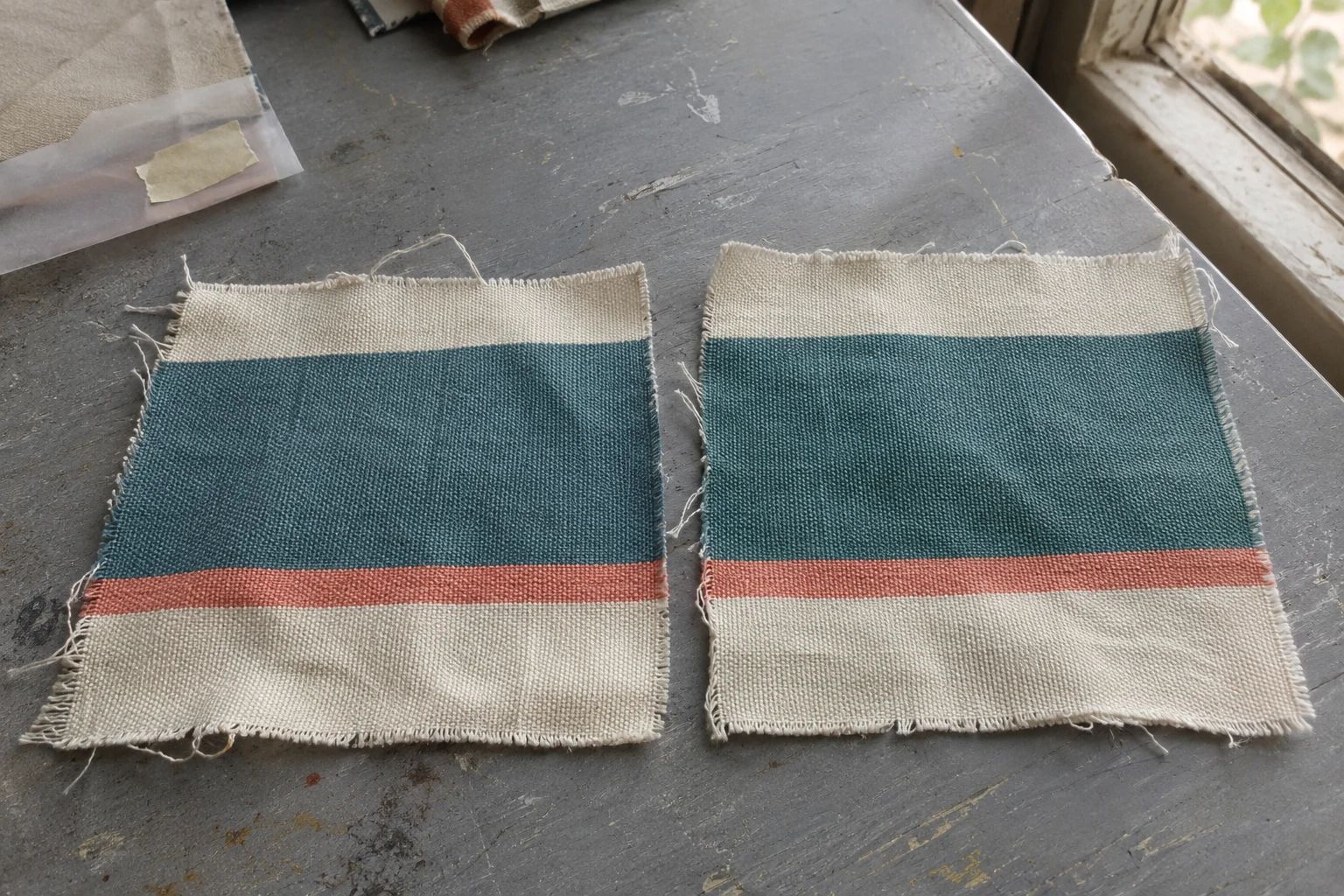
Keep a cutting from the approved dye-sublimation print, an unprinted piece from the same fabric lot, and the file and output details that produced the print. Mark the colours that were accepted and the lighting used to check them. When the next lot arrives, place the old and new prints side by side with the same areas and fabric directions in view. This gives you a way to check whether the print file still corresponds to the approved version, whether the base fabric has changed and how closely the new print matches the colour you previously accepted.
Think of a large petrol blue field running beside a fine coral stripe on a light polyester. A phone photo can help you find the right section of the old design, though the lighting, camera and display can all affect the blue you see in it. A warmer white fabric can change the look of the light parts even when the print file stays the same. The approved print, its unprinted base and the file give the team a specific area to match and enough information to investigate if the new sample differs.
Write down where the additional fabric will go. If it is for a separate run, the original unused sample is a suitable reference for the colour agreed at the time. If the new fabric will be sewn beside a panel from the previous lot, lay the two intended pieces next to each other. Fabric on hand may have been stored or used in conditions that affected how it looks. A repair or replacement calls for a comparison with the piece that will actually remain in the product as well as any original reference you still have.
Suppose a front panel comes from the remaining roll and a side panel comes from the reorder. Place the two fabrics so the edges that will meet at the seam are together. Look at the large petrol field, the coral line and the light base where each will actually be visible. A slight difference between separate finished articles may read differently along a single seam. Tell the cutting team which lots will be used next to one another. That makes it possible to test the intended join before approving an extra length for that use.
When the only old piece is a washed garment, record its condition before using it. It can be a practical reference for a replacement panel. Look at the part that will touch the new fabric. A section protected by a pocket or fold may look different from the exposed area beside it. If the production record is also available, keep it with the new sample so the team can see which details were carried over. Record that the visual target for this job is the current garment if that is what you agreed to match.
Use a piece from the actual print approved for the order. Mark the point in the repeat and the area of the roll it came from if these matter to the match. For the petrol and coral design, retain enough fabric to show both colours and where they meet. If the decision depended on a transition from one colour to another, keep that area too. A small corner can be sufficient when it contains the right reference. For a design with several tones or a gradient, a larger cutting may be needed to show the parts you will inspect later.

Keep an unprinted cutting from the same lot and mark the working face and direction. When a new print looks warmer, lay the two blank bases next to the corresponding prints. If the base is warmer as well, record that before requesting an artwork correction. If the bases look similar and the difference is most visible in the petrol field, that gives you a reason to revisit the print and transfer record. The unprinted cutting gives the team a reference for what the fabric contributes before the new order is printed.
Store the printed and blank pieces where they can remain clean and protected. Put the sample identifier outside the area used to judge colour and avoid folding repeatedly across the exact point used for approval. If the piece will travel between the print floor, sales and the customer, retain an archive copy where possible. A working cutting may pick up a crease or spend time in a different light. When someone questions whether it still represents the starting point, bring out the protected copy and compare the two samples under the same light.
If production supplied cuttings from different parts of the roll, keep their positions visible in the records. The reference used for colour approval can sit alongside another cutting retained to show the appearance near the working edge. Label which one serves each purpose. When the reorder uses a part of the fabric that was outside the first proof, check it against the relevant earlier cutting as well. The new approval can then say whether it concerns a sample from the middle of the roll, another location, or the areas used by the cutting layout.
Give the physical sample an identifier that also appears in the order and artwork records. Include the fabric article, lot, colourway, date and approved file version. Keep the actual production artwork identifiable among the original proposals and the versions sent for review. Two files with the same display name may have different colour adjustments. A paper proof can help identify which design was prepared for transfer, while the transferred cloth is the reference for the textile colour. If an early and a later version both appeared in trials, make sure the approved sample points to the version used for its print.
Where available, retain the output profile, paper or media definition, print mode and a reference to the transfer job. Include any step after transfer that formed part of the approved sample. If another facility produced the fabric, link its available job reference to the physical cutting. The level of detail will vary with the workflow, so record where the people preparing a reorder can find the settings documented for that job. Use the records to establish what the earlier order used. If the current materials or process differ, prepare a proof under the current conditions before deciding which setup to use.
If the first order included alternative colourways, keep the relation between each file and its best reference. One alternate trial may have been rejected because the coral looked darker or the petrol shifted towards green. A short note about the rejected sample can help when the same issue appears on the reorder. File the approval with the selected sample and leave the other candidates identifiable by their own codes. The person preparing a new output should be able to find the version that was accepted without assuming the newest file in the folder is the correct one.
Lay the samples with their working faces and directions aligned. Use the same number of layers and an agreed backing if the fabric is thin or allows the surface underneath to influence what you see. Put the middle of the petrol field beside its counterpart, then look at the coral stripe and the light base. A darker impression in a fold may vanish when you lay both pieces flat. Reposition the older and newer swatches in the same way before recording where you see the change. Note whether the difference covers most of the printed area or appears only at a selected edge.
When fabrics will meet in a seam, check them both with their cut edges together and with the allowance folded as it will be on the finished item. Bring the surrounding pattern into view. A tone difference next to a straight join can be easier to spot than the same difference on two separated pieces. If there is a second lighting condition that matters to the product, keep the primary approval reading and record the additional observation. Two fabrics that appear close in one light may look farther apart in another. Record how each was placed when making that comparison.
If the project uses instrumental colour measurement, identify the region, backing, number of layers, fabric direction and the instrument setup used for the reading. For a narrow coral line, a measurement area that overlaps the surrounding blue gives a combined reading. Look at that line visually or agree a suitable colour patch or method with the person taking measurements. Keep any agreed tolerances and conditions with the actual job. These details make it possible to repeat the reading on a later fabric without treating an approval limit selected for a different product as the requirement for this one.
An old photograph, one remaining garment or a forwarded artwork file may be all you can find. Record what is available and agree what the reorder needs to match. If a used garment will receive a replacement piece, compare the sample directly with that garment and record where the parts meet. Make a fresh approval on the selected polyester. Save the accepted result and the unprinted fabric as the starting reference for further orders. When the old approval sample is missing, the new record should state which physical piece and process the new decision actually used.
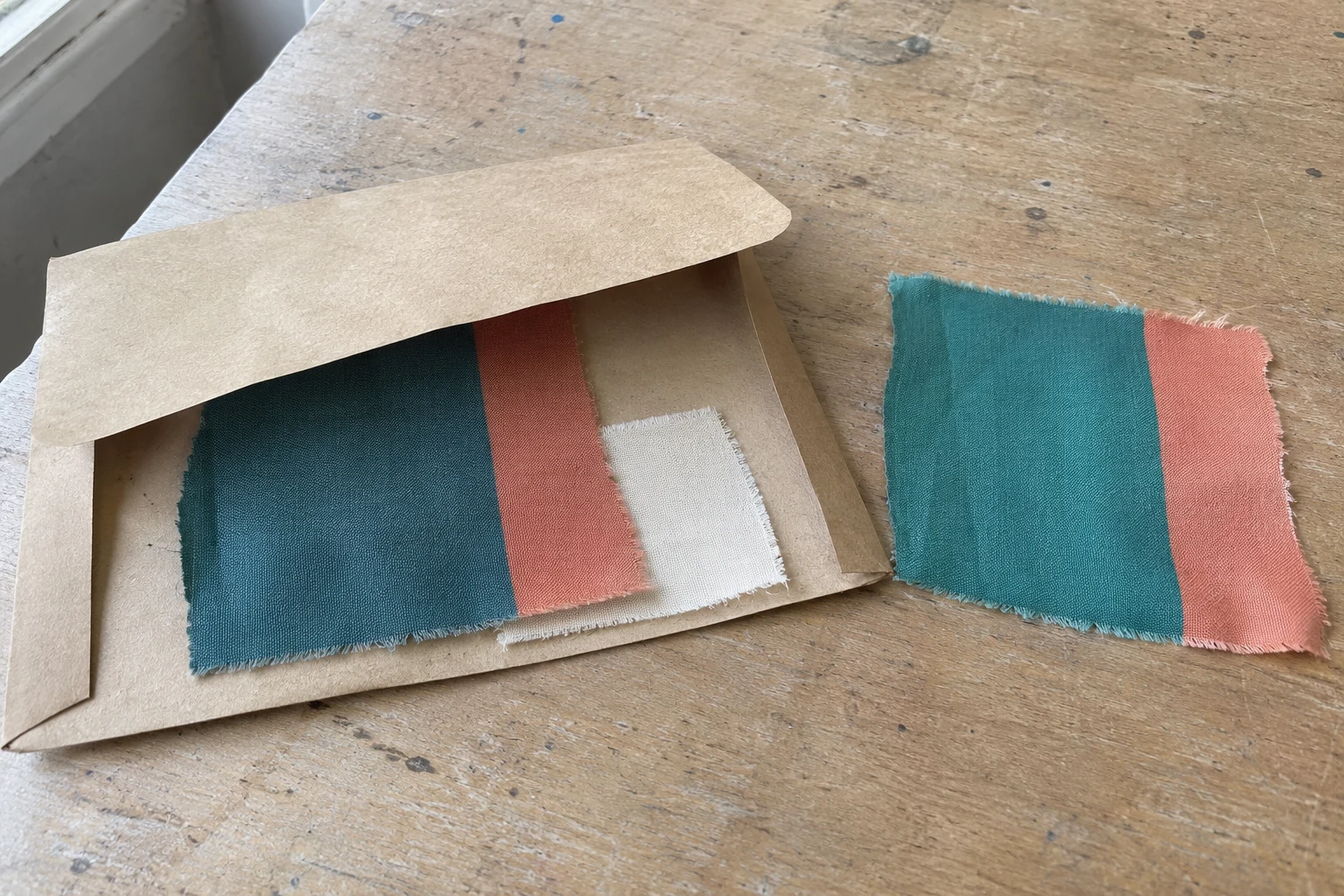
If you do locate the old sample, check how it has been stored. Use a protected area when a mark or a crease obscures the point that was originally inspected. Where two original cuttings survive, compare them under the approval light and record which one is the working reference. If they differ, resolve that choice before looking at the new output. If material, paper and workflow have all changed, start the comparison with the area where the difference was seen. Keep the retained sample nearby while you run a new proof that adjusts one relevant factor.
Record which earlier piece was used and whether the new approval covers a separate run, a join to existing fabric, or both. If the cutting layout uses a section near the edge, include that section in the check before cutting the order. Keep one cutting from the newly approved lot with the same identifiers as the rest of the job. Mark the exact spot compared in any photograph. By retaining the older approval and linking the new one to it, you preserve a record of which lot was approved for each use.
Suppose you need twelve more metres of the same print. Mark the colours and seam that must match the old lot. Supply a cutting from each side of that join and compare them under the same light, in the intended grain direction, both flat and sewn. If the new fabric will go into separate garments, note that use on the order.
For a roll-to-roll dye-sublimation reorder, send the fabric code, lot, artwork version, finished length and a physical colour reference. Ask for a sublimation trial on the production fabric and compare it directly with the earlier cutting. Record who approved the proof and whether the approval covers a mixed-lot seam or separate cutting. Mark the direction on both cuttings. Link both approval records to the order and retain the blank cutting from the correct lot for the next comparison.
phone: +90 212 576 5250
fax: +90 212 493 0336
email: info@unlutransfer.com
Yenidoğan Mah. Eser Sok. No: 6-8
Bayrampaşa, 34030,
Istanbul / Turkey
TR 9150171175
Bayrampaşa Tax Office