For quick contact: +90 532 288 2200


Compare three pleat shapes at the same finished waist and length. Check where each skirt opens at rest and in motion.
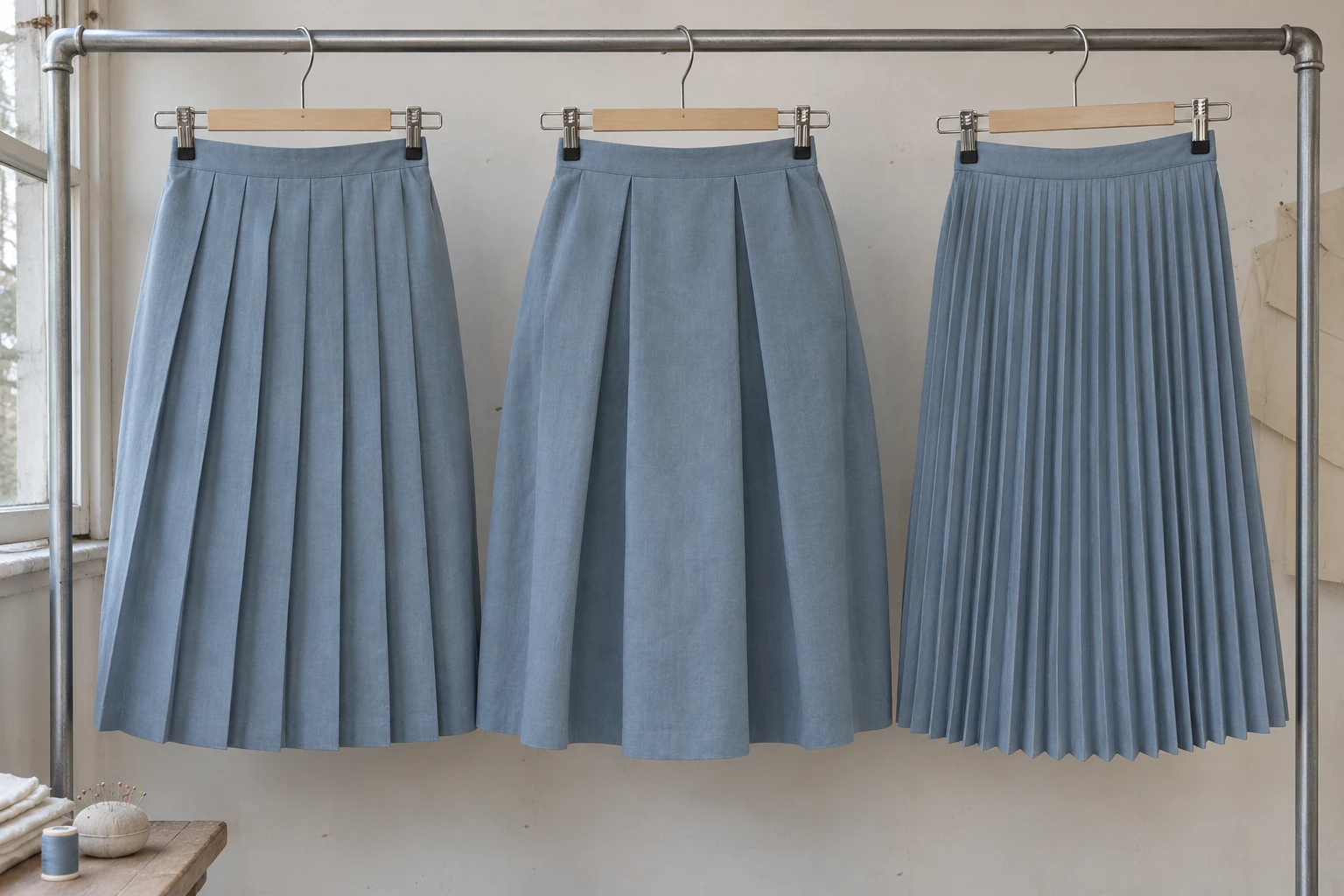
Start by deciding where the skirt should open. Knife pleats fold repeatedly in one direction. Box pleats put two opposing folds around a broad face. The accordion sample here has a sequence of narrow peaks and valleys. Try all three in the same cloth, finished waist size and skirt length. Look at the waist, hip and hem while the samples hang freely. Then compare the folds when the skirt takes a step or opens to one side. The useful result is a sample that shows the chosen fabric, fold dimensions and the point where the skirt starts to gain volume.
Imagine a knee-length skirt in matte dusty blue. The brief calls for a quiet waist and visible movement at the hem. One-way folds can give the front a regular line. Wide box pleats can concentrate fullness in a few places. Fine accordion folds can spread the opening across more points. Each response depends on the cloth, fold depth and length. In the sample request, describe the front view as well as the motion you want. A pleat name by itself leaves the fabric, scale and expected shape open. A before-and-after view at the same waist support shows what the garment actually does.
On a knife-pleat sample, the visible folds face the same way. Some of the cloth can sit beneath each fold while the skirt hangs and become visible as it moves. The direction is part of the design. Look at the skirt from the front and each side, then see which fold edges open during a step. Mark where the upper portion is held, if applicable, and where the cloth is free to open. If the two sides appear different, confirm whether that is intended before changing the material or spacing. A layout can make the same series of folds look quieter from one side of the garment.
An outward box pleat has opposing turns around a broad face. That face can create a flat area framed by deeper shadows at the edges. A single box at centre front can place the fullness in a small part of the skirt. Several boxes around the garment can spread it farther. Observe both returns when the cloth is supported at the waist. A pleat near the curve of the hip may open a little differently on each side. Show the outside face and the returns in the sample notes. A physical piece helps distinguish the intended face from an inward-facing construction with a similar name.

For the accordion example, the cloth alternates through narrow crests and valleys. The spacing between the crests can increase as the lower portion opens. This example uses regular narrow pleating. Some pleaters use related names for different geometries, including folds that spread from the waist towards the hem. Show the planned spacing and direction at the upper and lower edges so the supplier can identify the actual shape. A radial sunray arrangement is a separate layout. For the comparison here, prepare the intended accordion pattern and record whether the folds stay almost parallel or need another direction in the production sample.
Keep the finished waist size and skirt length the same across the first samples. If you only make front panels, start from the same pattern section and use the same amount of finished waist along the top. Use the same cloth and grain, and finish the lower edges in a similar way. The folded fabric inside each pleat can differ. Record the width visible at rest and the cloth taken up in the folds separately. The trial compares the volume and movement at a shared finished size. The amount of cloth needed for production still has to be assessed on the laid-out pattern.
Note how each pleat is held. A fold held by stitching, a heat-set fold and a temporary hand-folded mock-up describe different states of the project. A paper model is useful for identifying the faces and edges, while the actual cloth shows how the skirt hangs. Before deciding, make a panel in the fabric that will be used. Check the proposed forming or sewing method with the sample room. Include the intended finish on the bottom edge because it can alter the weight and movement. If the project requires particular performance after care, evaluate that separately on the combination that is being considered.
Hang the three samples with the waistline supported at the same height. Keep the hems off the floor and leave space around each skirt. Compare the front at rest, then place the samples on a form with the intended waist and hip. A hanger can hold the top edge along a straight line. A form makes the fabric turn around the body. A box pleat that stays closed on a flat hanger may start to open as it crosses the hip. Observe both views before adjusting the fold. Record where you first saw the fullness rather than giving the entire pleat a single description.
Observe the thickness at the waist as well as the shape at the bottom. A cloth with more body may show several layers under the waistband. A lighter cloth can lie quietly at the waist and still gather around the hip or swing out below it. Mark the approximate hip line on a separate drawing to keep all three comparisons at a shared height. Then record where each pleat begins to open. If a skirt looks wider near the hem, say so. If the top starts to spread sooner than intended, note the different observation. The next sample can address the place that matters to the silhouette.
Look at the natural front and side views before moving the cloth. Keep the waist fixed while you ease the lower portion towards one side. Try the same direction and a comparable movement for each skirt. Follow where the narrow folds of the accordion increase their spacing, where the box opens around its face, and which way the knife pleats begin to unfold. Use a movement similar to the expected stride or sitting position. A wide pull can reveal more cloth than the garment will show in use. Save the front and movement views together so the amount of opening has a visible starting point.
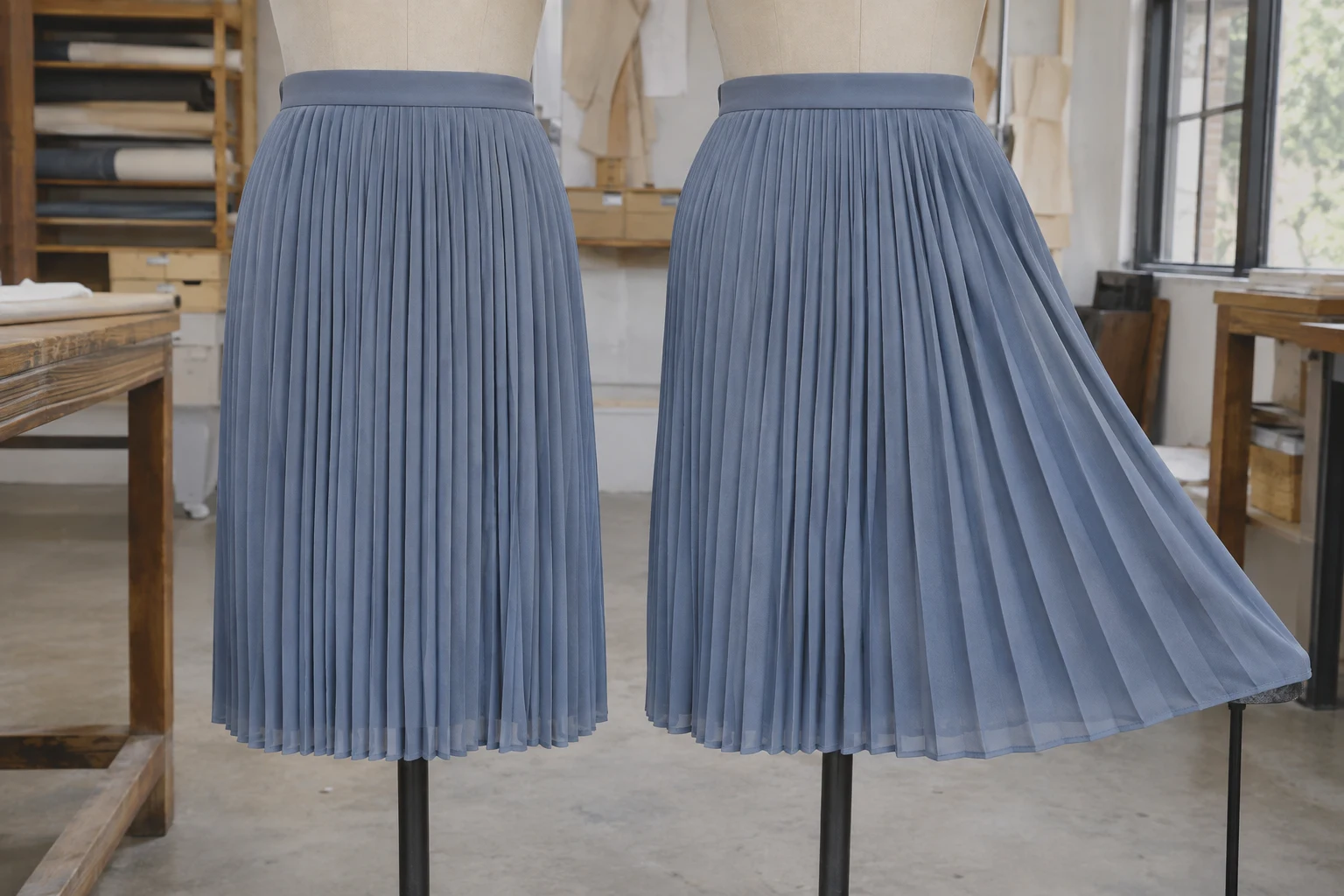
Look at the cloth as it is released. Record where the folds settle and whether the resting profile returns to what you expected. A fold held through the top can release its fullness lower down. A fold that stays open can change the resting appearance of the skirt. Compare an ordinary stride and a longer one if the product needs both. If the skirt is meant to look close at the hip but allow the hem to move, that is a more specific goal than an overall increase in fullness. Show where the cloth moves in each condition and what stays visible at the waist.
Repeat the check on both sides if the folds appear to open unevenly. A knife pleat naturally presents a different edge in each direction. A box pleat can retain its broad face while one edge opens around a curve. With accordion pleats, watch where the gaps between peaks become visible. Record the movement from the same position and with similar light. Shadows can make the fold look deeper even when the outer profile changes little. Check the hem and side shape in addition to the photograph. A note about the part of the fabric you moved helps another reviewer repeat the observation.
If the front opens higher than intended, first find where the top fold is held and where the cloth becomes free. A new knife-pleat trial can release the fullness lower down if the construction allows it. With a box pleat, test a different face width or reposition the box if the fullness is concentrated in an unhelpful place. With accordion, review fold spacing and the way the hem is finished. Keep the original piece. Changing fabric, fold shape and hem together can make it difficult to tell which choice altered the result. Record each alteration against the part of the skirt where you expected to see a change.
When the skirt length changes, prepare at least one trial at the planned length. An added section of cloth can change the weight below the waist and the way the hem swings. A thick temporary tape or turned edge can have an effect of its own. If a reversible sample has been finished in a way that weighs down one side, compare it with the intended finish before drawing conclusions about the fold. Keep a note on the finish used for each view. The garment with the actual lower edge can reveal a difference that was hard to judge on a short swatch.
If pleats will appear only at the front or on the back, examine the transition to the plain fabric. A small piece can show the fold structure while leaving the overall distribution of fullness uncertain. Fit a large enough section to see the side line and how it changes with movement. When the side profile breaks sharply, test changing where the pleats begin before changing every fold. For two candidate fabrics, keep the selected pleat geometry and compare it in both. This shows whether a more fluid or firmer cloth changes the shape with the same fold layout. Use similar waist support and light for that comparison.
Record the fabric code, grain, fold type, visible face, fabric taken up in the fold, finished waist and length. Show where the fullness appears in the quiet and moving views. For example, a note can state that the front stays flat above the hip and the lower folds open towards one side in a step. Identify which sample used a temporary hold and which is closest to production. When another fabric or another length is proposed, start the new review at the same place. The pattern record should allow the selected pleat to be identified by its geometry and its effect on the skirt rather than by its name alone.
Before signing off, place a front and back view side by side at the same scale. A skirt with a quiet front can still gain considerable width at the back when the wearer sits. If the back opens sooner than planned, pin a temporary hold where the construction permits and repeat the movement. Record what changed before committing the altered line to the pattern.
Review all three alternatives at the same waist height before choosing one. Ask how the silhouette should read when the skirt is still and where the cloth should open as the wearer moves. Then select the fold and fabric that show the required combination on a sample. Keep the approved repeat along with a full view and a movement view. If later work changes the material, scale or finishing method, the preserved record will show which part of the silhouette the team meant to retain and what needs to be checked in the new version.
phone: +90 212 576 5250
fax: +90 212 493 0336
email: info@unlutransfer.com
Yenidoğan Mah. Eser Sok. No: 6-8
Bayrampaşa, 34030,
Istanbul / Turkey
TR 9150171175
Bayrampaşa Tax Office