For quick contact: +90 532 288 2200


In patterned sports textiles, colour fastness to perspiration assesses changes in the fabric’s own colour and staining of another fabric separately. Results must be read alongside the test method and conditions; deciding whether they meet requirements also calls for the applicable acceptance criterion.
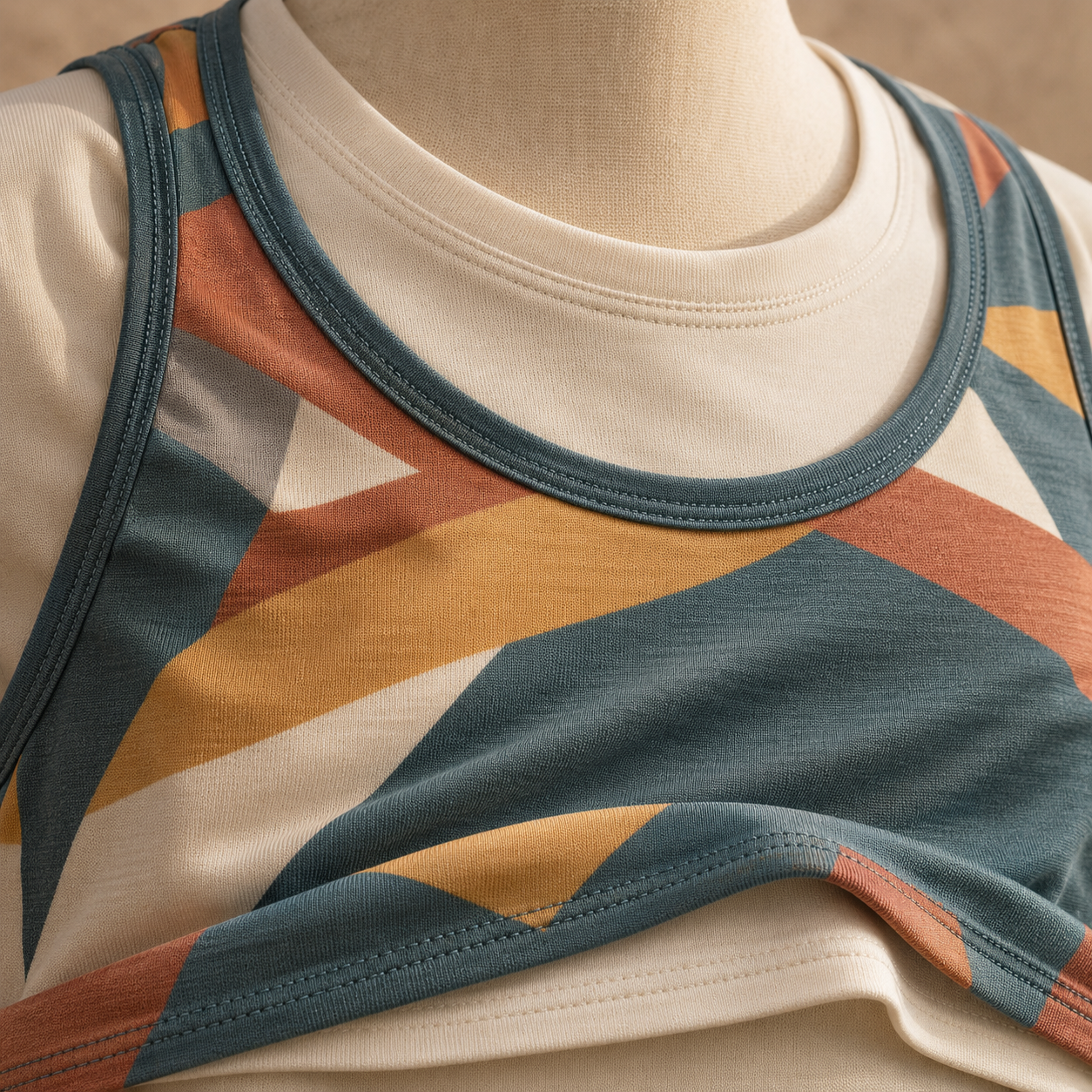
Illustrative layering: change in the sports fabric’s own colour and staining of the fabric it touches are assessed separately.
Assessing how a patterned sports garment’s colour holds up to perspiration requires more than examining the pattern itself. A change in the fabric’s own colour and the colour it leaves on another fabric are two separate observations. Colour fastness to perspiration makes this distinction clear: it examines how well the garment retains its colour and how much it stains the textile it touches. Printed textiles, as well as dyed fabrics, can fall within the scope of this assessment.
To assess colour change, the tested specimen is compared with the same fabric in its untreated state. The surface being examined is the patterned fabric itself. This assessment should not be understood as limited to what we commonly call fading; it concerns the difference between the colour before and after the test.
Staining is assessed on a different surface. The fabric placed in contact with the specimen to examine colour transfer is called the adjacent fabric. Any colour deposited on this fabric is assessed separately from the appearance of the patterned specimen. A coloured top, damp with perspiration, transferring colour to a light-coloured undergarment is one example of how this behaviour might occur in use. A pattern retaining its appearance therefore does not, on its own, prove that a light-coloured fabric touching it will remain unstained.
The laboratory test establishes a controlled contact arrangement to examine these two behaviours under defined conditions. In descriptions of the ISO 105-E04 procedure, the specimen and adjacent fabric are treated with solutions representing the effects of perspiration and held in contact under pressure. Afterwards, the fabrics are dried separately, and colour change and staining are assessed independently. The solution, contact and pressure are all elements that determine the conditions under which the result is obtained. The grade in the report therefore describes primarily the behaviour observed in that test arrangement; it does not represent every condition in which the garment may be used or its service life.
The method code is part of the result for this reason. For example, EU Ecolabel Criterion 19 for textiles requires verification using ISO 105-E04 under acidic and alkaline conditions, with a multifibre adjacent fabric. This defines both the chemical conditions of the solution and the contact fabric on which colour transfer will be assessed. The scope of AATCC TM15-2021e covers only acidic perspiration conditions. Even if grades obtained using the two methods are expressed with the same number, the test conditions cannot be assumed to be identical. The method name and version should also be checked when comparing results.
The sample and adjacent fabric are treated with solutions representing perspiration and held in contact under pressure.
After treatment, the patterned sample and adjacent fabric are dried separately.
Colour change is assessed by comparing the sample with an untreated piece of the same fabric. Staining of the adjacent fabric is assessed separately; the two observations are rated using different grey scales.
This is an illustrative summary of the ISO 105-E04 sequence described in the article, not a complete test protocol or a verified product result. Ratings must be read with the method and conditions; a conformity decision also requires the applicable acceptance criterion.
Colour change and staining are assessed using separate grey scales because they are based on different comparisons. ISO 105-A02 defines the grading of colour change, while ISO 105-A03 defines the grading of staining on the adjacent fabric. These scales convert the observed difference into a grade by comparing it with specified references. This allows a difference in the fabric’s own colour and colour transferred to another fabric to be reported without confusing the two.
In both assessments, a higher grade indicates a smaller difference. At the top of the scale, 5 indicates that no colour change or staining is observed in the test evaluation; the difference increases as the grade falls towards 1. Notations such as 3–4 and 4–5 are intermediate grades, each belonging to a single assessment. For example, 4–5 represents the step between 4 and 5, rather than two separate test results. Before interpreting a grade, it is necessary to establish whether it refers to colour change or staining. A high grade for colour change cannot substitute for the staining result.
Whether a result is acceptable is defined separately. The test method determines how the assessment is performed, while the acceptance threshold determines which result is considered sufficient. EU Ecolabel Criterion 19 requires a grade of at least 3–4 for both colour change and staining in textiles within its scope. An exception allows a grade of 3 for fabrics that are both dark-coloured and made from regenerated wool. This threshold and exception are conditions of that programme; they do not establish a universal pass grade for all sportswear.
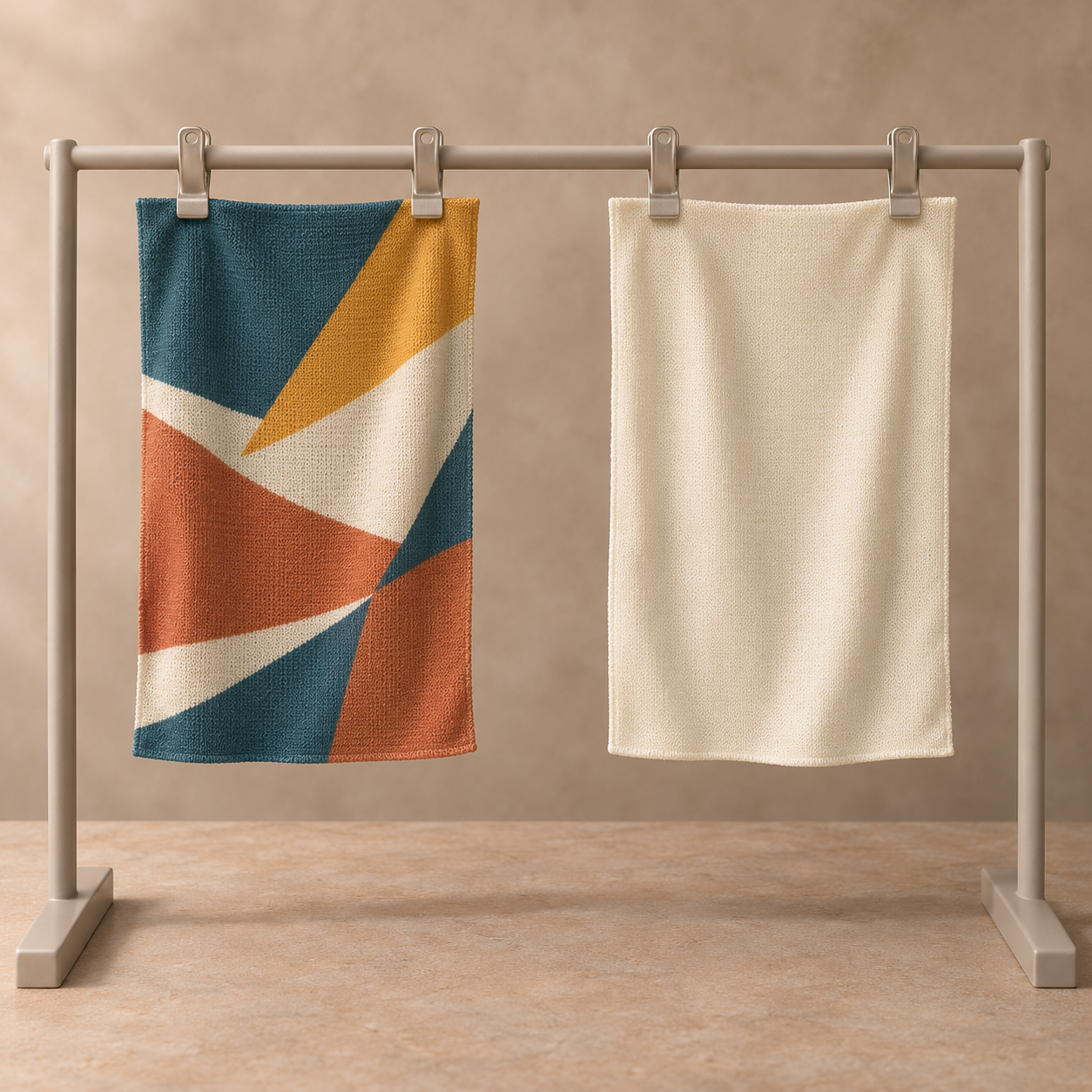
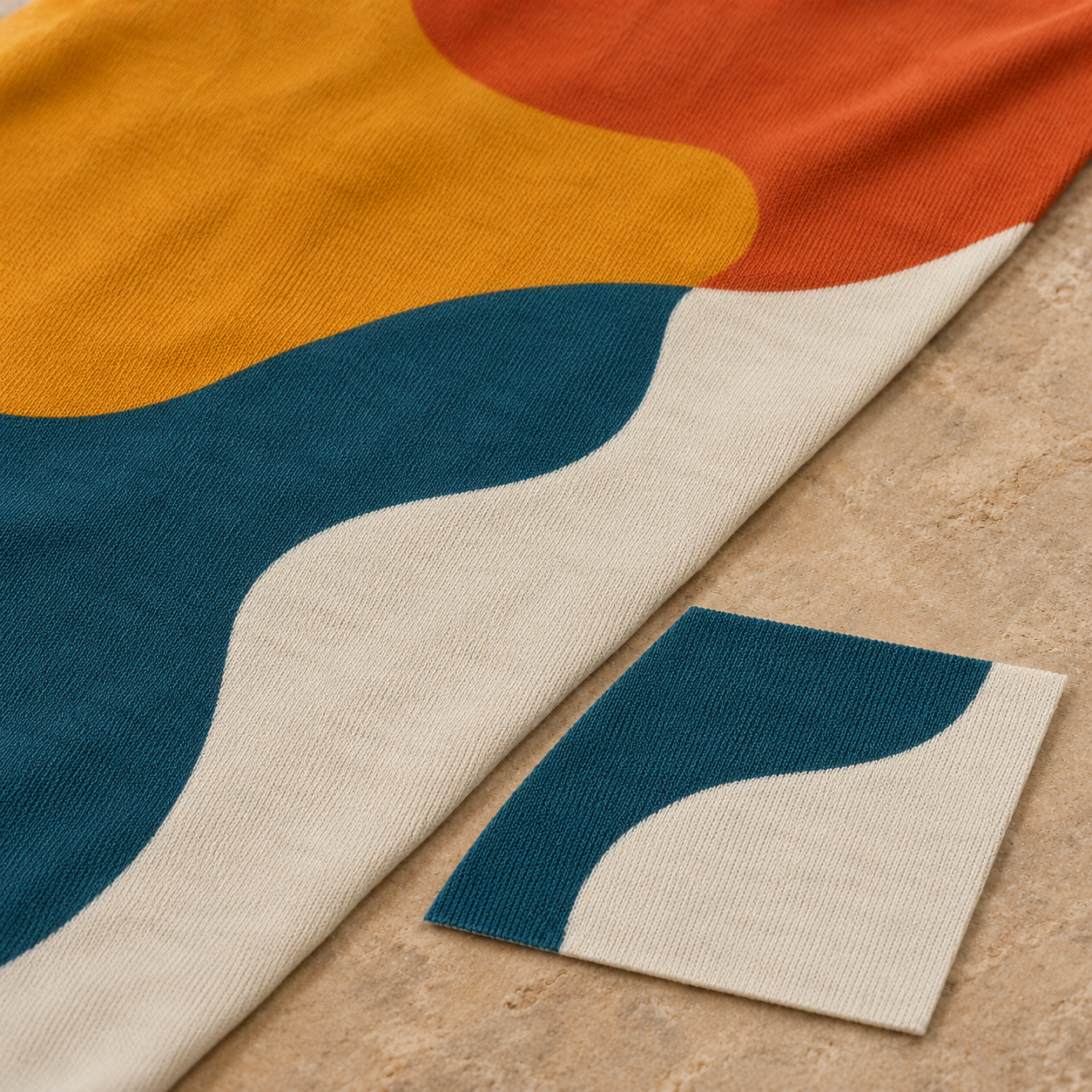
To understand the scope of a result for a patterned fabric, it is also useful to know which colours are included in the tested piece. If it is unclear what the specimen includes, there is not enough information to apply the grade to every colour in the pattern. Similarly, without a verified result for a particular product, it cannot be claimed that its fibre composition or printing technique will deliver superior performance.
When reading a report on colour fastness to perspiration, consider the grades for colour change and staining alongside the method and conditions. If a decision on conformity is needed, the applicable acceptance criterion must also be considered. Colour fastness to washing, rubbing and light requires separate assessments; a result for colour fastness to perspiration does not establish the results of those tests.
Explore our fabric sourcing services.
phone: +90 212 576 5250
fax: +90 212 493 0336
email: info@unlutransfer.com
Yenidoğan Mah. Eser Sok. No: 6-8
Bayrampaşa, 34030,
Istanbul / Turkey
TR 9150171175
Bayrampaşa Tax Office