For quick contact: +90 532 288 2200


Compare ways to reach the same gloss target. Check the face and reverse, handle and drape, and confirm the finish with the supplier.
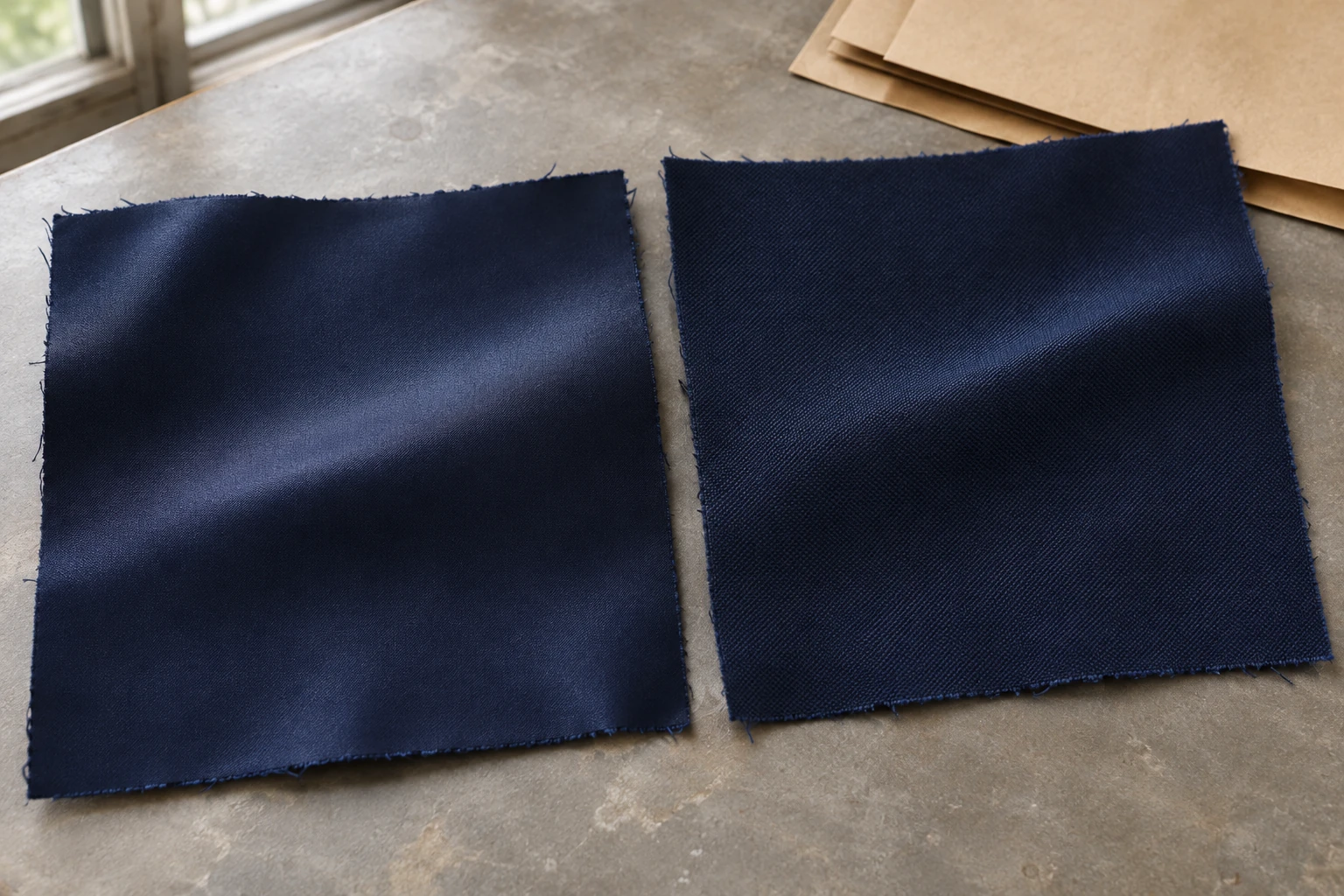
Start with the appearance you want and how the cloth needs to behave on the product. Ask for a gloss-coated trial if a distinct surface layer or the handle it produces is part of the brief. Ask for a calendered trial if you want lustre with the weave still apparent. Two finishes can look similarly glossy from a single angle. Compare them on the same base cloth where practical. Look at the face and reverse, handle the swatches and see how they drape. Ask the supplier to identify the process and tell you whether a separate material was applied to the surface. Keep the chosen physical swatch with the photograph and the finish information.
Imagine two deep navy fabrics for the front panel of a jacket. Near a window, both show a similarly wide highlight. Turn the swatches and you may see more of the weave in one while the other looks smoother. They may also settle differently when bent. Use these observations alongside the information about the finishes. The weave, colour and earlier processing can affect the appearance and handle. A brighter face or a duller reverse tells you how the swatch looks. Confirm its construction and finishing sequence with the supplier.
Put into words what “lacquer-like” means for the product. Do you want sheen across the whole panel or over a particular area? Should there be a sharp highlight or a softer one that spreads along a curved surface? A swatch can give a suitable reflection while flat and concentrate the light into a narrow band on a sleeve. Show the product area on a sketch and explain how it will be lit and viewed. A physical example helps if you point to the specific quality you need. You could ask to match the highlight while keeping a softer handle than the reference.
A coating changes a fabric surface by applying a material directly or transferring it from a carrier. The result can be glossy, with the effect depending on the coating, its application and the base. A thin finish may leave the weave visible. A fuller surface may make the individual yarns harder to pick out. Use those observations to describe the swatch. Ask for the finish information to establish what material is on the cloth and how it was applied.
Calendering passes the fabric through rollers and can change how smooth the surface is and how it reflects light. Depending on the finish, gloss can involve pressure, heat or friction between the surface and a roller. Some glazing processes include another finish before the calendering step. Ask whether the sequence includes a coating, finish or film. The name of one step is useful when it comes with a description of the rest of the treatment. For a film laminated to the fabric, record that construction in the same terms the supplier uses. A transferred coating may also use an intermediate carrier. The supplier's description helps establish which construction is being quoted.
Write down any construction requirements separately from the visual reference. On a jacket, you might want a glossy front with enough flexibility for areas that move. Specify whether the finish will cover the fabric or only a panel. If a separate layer is required or needs to be avoided, say so. If the product needs a particular degree of lustre and the process is open, invite comparable trials. Recognising which parts of the brief can change helps when one finish gives the desired appearance with a different way of handling the cloth.
If the fabric is suitable for both routes, request an untreated swatch and a sample of each proposed finish on the same base cloth. Otherwise, ask the supplier to identify the base for each trial. Compare the fabric and finish combinations as supplied. For example, two different woven cloths may have different weights or yarn sizes and drape differently before any finishing. Record the fibre information available, the fabric structure, grain direction and stage of finishing that the supplier gives you.
Before comparing the faces, match the swatch dimensions and orientation. Pieces that hang different distances over a table edge will fall differently. Start with pieces cut in the same size and grain direction. Mark the codes on the reverse. Look at each swatch before reading the process details so you can describe the appearance without having to infer a method. Link the observations to the process once you have compared the pieces.
Three codes are enough for a first set. Put the untreated face under the first code and give a code to each finished sample. Draw the visible side and the grain direction alongside each. Keep separate lines for sheen, visible weave and the way the cloth bends. Describe what you see in each one. For instance, a narrow highlight may travel across the cloth when it is tilted, while the cut edge stays straight after release. These observations make it easier to ask for a specific change.
Check whether the swatches are at the same stage. One may have completed finishing and the other may be an intermediate test. If finishing steps are still planned, review the handle and sheen of the final fabric before approving it. Compare candidates in the intended shade if possible. Where colours differ, write separately about the reflection and the appearance of the unlit fabric. For an existing quality that meets the brief, identify the combination you approved. If you need to compare processes alone, return to trials on the same base.
Lay both swatches flat under soft light and then tilt them together toward it. Look at where the highlight begins, how wide it is and whether its edges change when the angle changes. Check the weave with the highlight in view and again when the bright area moves away. Closely spaced yarns may be visible from one direction and hard to see in the brightest part of the reflection. If the presence of a surface layer matters, ask for the process description.

Look at the front, reverse and cut edge. A smoother face and duller reverse can help determine which way to orient the fabric. When the supplier says the material was applied to one side, record that separately from your description of the front and back. A thin layer may be difficult to see at a cut edge. Fibre ends and shadows near a fold can also make a light line. If the construction is a deciding factor, request the specification for the supplied sample along with any process details needed to confirm it.
Bring the reverse into a flat position under equivalent light. A turned corner can look dull simply because it lies in shadow. Take comparison photos with the same angle where you can. Automatic exposure can darken the ground around a bright reflection. Include both samples in one view or use comparable settings, and keep an image from the distance at which the finished piece will be seen. Note how the highlight appears there as well as in the close view.
Use samples with the same grain direction and dimensions. Run your fingers lightly across the face and describe what you feel, such as smoothness, slip or fullness. Bend the same width of fabric into a gentle curve. Show the supplier a physical reference if you need a particular handle and explain which aspect matters. Fine yarns can be visible under a finish with a different feel. Two candidates may also give similar gloss and bend with different resistance.

Place both pieces over matching supports and let the cloth rest under its own weight. Keep the unsupported length, size of the supports and fabric direction the same. One piece may form a broad bend and another a tighter one. Relate that to the pattern piece. A collar or bag panel may need to keep a defined shape. An area that moves with the arm may need to settle more softly. Repeat the comparison across the grain if direction matters. Give both swatches the same starting position and wait for them to settle so a fold left by hand placement does not drive the observation.
Prepare a small mock-up of the relevant part. The outer fabric can behave differently once it is sewn to a lining, placed over an interfacing or attached to a support. Compare the free cloth first, then assess it on the planned backing. If a highlight gathers in one place around a curve, photograph the area and describe how it looks from the expected viewpoint. Make a separate note of the reverse wherever it will sit next to another material or be felt in use.
One of the options may feel closer to what you want and look glossier than expected. The other may meet the visual brief and hold a shape that feels too strong for the pattern piece. Decide which change leads to a useful next trial. Ask whether the shine can be softened on the same base or whether a different finish on that base can give more drape. Retain the starting swatches so the next comparison includes the change you asked for.
Make the decision using appearance, handle, drape and the confirmed construction. Specify what the swatch provides, such as a long reflection on a flat panel, a soft bend and visible weave in diffuse light. If the construction includes a distinct layer and that layer is required, attach the supplier's description. If the project needs a finish without a separate layer, ask for confirmation before approving the method. Record the fabric code, finish code, side, position on the product and light direction next to the approval photo.
If both candidates are suitable, record which parts can use either one. One may be acceptable on a firm panel while the other works better in a section with more movement. If the sample used for the decision was smaller than the garment piece, check the first sewn panel at its real size. Keep the chosen swatch with the pattern information so that the cutting and sewing teams can see where its handle and appearance were approved.
List the material requirements in the order that matters to the product. If the surface layer is essential, confirm its presence before comparing the photographs. If the appearance is the main requirement, compare the finished swatches on the actual panel and keep the best match with the base cloth for later reference.
Treat care and durability as separate questions. Ask what fabric and finish were used for any wash, rub or fold results the supplier gives you. If the chosen finish, shade or base changes, compare the new sample in the conditions that mattered for selection. Before committing to production, check that the designated fabric and process still correspond to the approved swatch and that the cloth gives the intended appearance and behaviour on the piece.
phone: +90 212 576 5250
fax: +90 212 493 0336
email: info@unlutransfer.com
Yenidoğan Mah. Eser Sok. No: 6-8
Bayrampaşa, 34030,
Istanbul / Turkey
TR 9150171175
Bayrampaşa Tax Office